Referral for Specialist or Cosmetic work
- Details
The SmileSpecialist® Centre is based at 9–13 Station Road, Haworth, Keighley, West Yorkshire, BD22 8NL – a convenient location between Leeds and Manchester, within reach of Bradford, Halifax and the wider Yorkshire & Lancashire regions. We are opposite the steam railway station at the bottom of the village hill, close to the new Co-op store.

Our SmileSpecialist® Centre Dental Practice is on Station Road, opposite the Steam Railway Station at the bottom of the village hill, just opposite the new Co-Op store.
Dr.Kilcoyne has won National Prizes for the Quality of Patient Services, so you don't have to compromise! Please do ask your regular Dentist for a Specialist referral to us, or if this is impractical for some reason, you may refer yourself directly.
*Dr.Kilcoyne is a fully GDC Registered, Trained Dentist and Specialist* in the Functional & Cosmetic aspects of Tooth Implants, Crowns, Bridges, Precision Dentures, mini-implants, Ceramics, Veneers, Occlusion, Bonding and Restoring Smiles.
If driving, get FREE directions at the AA website www.theaa.com
Or just put in our postcode BD22 8NL into your SatNav. or Google maps on phone.
We have side street Parking near to the Practice too!

Dr.Kilcoyne is a fully registered UK Specialist in Prosthodontics, which includes all tooth Implants, Crowns, Veneers, Dentures, Bonding etc, to Restore or Replace teeth functionally and cosmetically so you can have a Smile that you can be proud of, without compromise. Yes all this expertise, experience and excellent track-record have a price, but we still believe it is Good Value for the level of Specialist Quality one is getting and can be confident in.

Dr.Kilcoyne has won National Prizes for the Quality of our Patient Services, so you don't have to compromise !
Dr.Kilcoyne is a fully registered UK Specialist in Prosthodontics ,which includes Implants, Crowns, Veneers, Dentures, Bonding etc, to Restore or Replace teeth functionally and cosmetically so you can have a Smile that you can be proud of, without compromise. Yes all this expertise, experience and excellent track-record have a price, but we still believe it is Good Value for the level of Specialist Quality one is getting and can be confident in.
Do you want a Smile that you can be proud of, sometimes in just weeks ???
*Dr.Tony Kilcoyne BDS;LDS;MGDSRCS(Eng);M.Med.Sci.(U.Sheff.);FFGDP(UK) GDC Registered Specialist in Prosthodontics, with an additional Special interest in Braces too.
GDC number 58373, see www.gdc-uk.org to check Dr.Kilcoyne's amazing credentials.
Make 2026 THE year for a better Smile; begin with Haworth BD22 8NL on the map above.

*Dr.Kilcoyne is a UK registered Specialist in Prosthodontics (GDC No.58373) which includes The Functional and Cosmetic Dentistry aspects of Crowns, Dental Implants, Bridges, Veneers, Fillings, Dentures, Bonding etc.
The PLANNING of Treatment Options is just as important as the Quality of Treatment - Dr.Kilcoyne can help you get both right, first time!
Wishing you good Dental Health AND a Smile to be proud of, from all at the SmileSpecialist® Team.
As always, Prevention is cheaper and better than Cure - that includes Preventing making bad choices based on costs alone !
- Details
Emergency dental treatment, toothache & self-help ideas (valid 2026 & onwards)
These general tips and self-help dental treatment ideas for 2026 and beyond are for people in the UK with dental emergencies, toothache, accidents etc. They are NO substitute for getting qualified, personal advice and care directly from your Dentist or Doctor as soon as possible.
We strongly emphasise the importance of getting dental professional help directly and as soon as possible. However, dental access – especially via NHS routes in England – has become more difficult and variable, as many national reports and investigations have shown over recent years.
For example: NHS Dental crisis in England – systems still failing beyond 2022 .
NOTE: Everyone in the UK can get medical or dental advice 24 hours a day by calling NHS 111. Please don’t delay if you are worried.
Find an Emergency Dentist in Bradford or Leeds NOW if you can’t see your own Dentist quickly – call 111 if you are in the UK!
Dr.Kilcoyne has campaigned nationally for better Dental Emergency clinics and the 111 service for EVERYONE, on mainstream TV and in the wider press too.
Dr Kilcoyne’s Expertise & Media Work »
If you might have a serious or life-threatening emergency – act NOW
Call 999 immediately or go straight to your nearest Accident & Emergency (A&E) department if you have any of the following:
- Heavy bleeding from the mouth or socket that does not slow down after 10 minutes of firm pressure with a clean pad.
- Swelling in the face, mouth or neck that is getting worse, making it hard to swallow, breathe or open your mouth.
- Loss of consciousness at any point after a blow to the head, face or jaw – even if the person “came round” quickly.
- Serious injury to the jaw or face – teeth not meeting properly, obvious deformity, severe pain after trauma.
- Any dental infection where you feel very unwell (fever, shivers, confusion, or feeling faint/collapsing).
Do not wait to see if things improve. Your general health always comes before any individual tooth.
Rapidly spreading infections in children or adults can distort the face and threaten the airway if left untreated. The photos below show significant swelling from dental infection that needed urgent treatment:
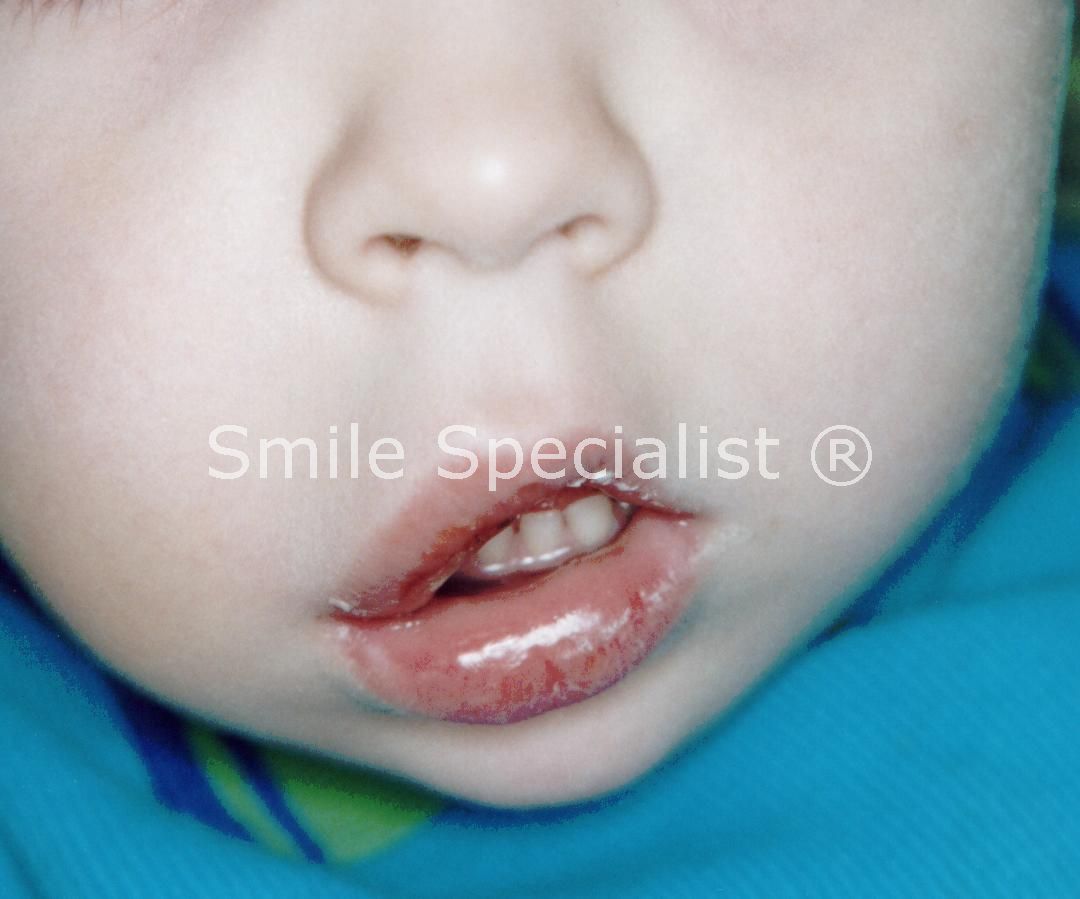
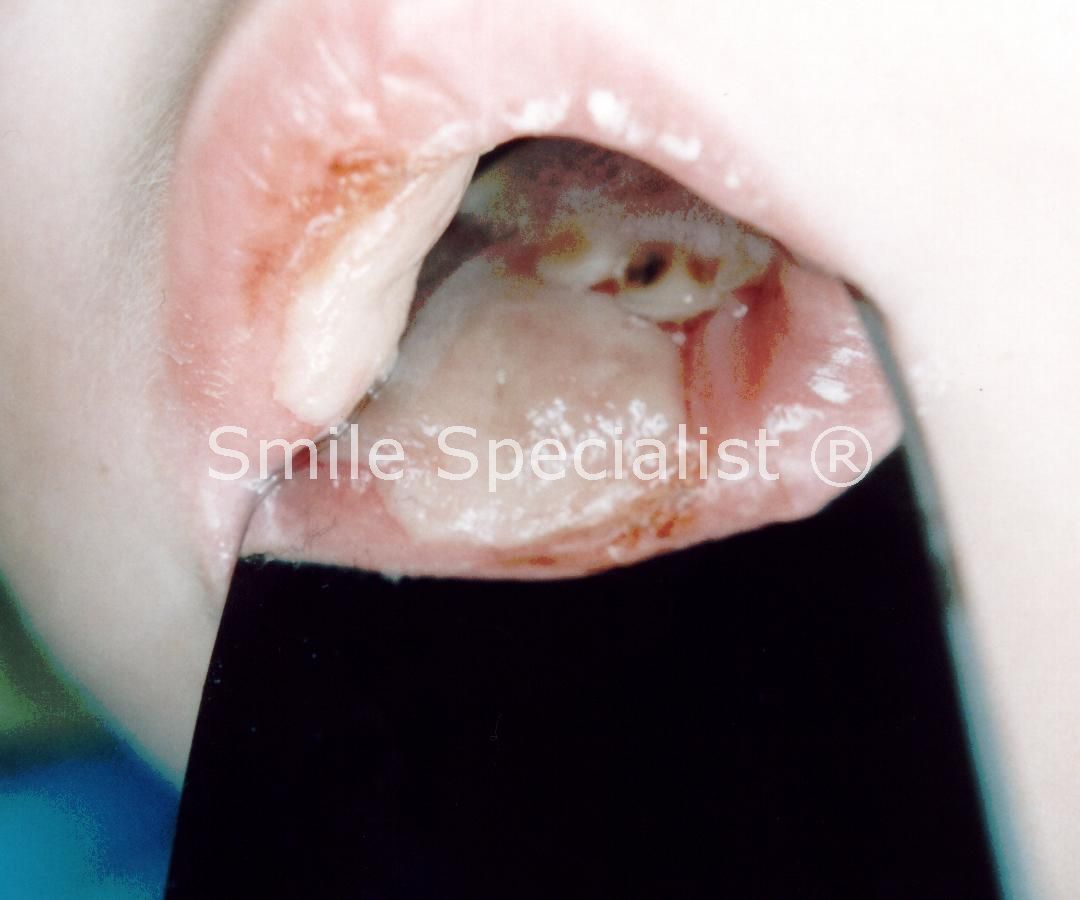
All of the above emergencies often need immediate medical assistance from Hospital A+E.
They will usually involve a Specialist Oral Surgeon or on-call dental team once the patient is stabilised medically.
NHS 111 – 24/7 medical and dental advice (but toothache often not classed as an “emergency”)
Official NHS systems in England have, for many years, often not regarded toothache alone as a “dental emergency”, no matter how bad the pain is. This has been a source of huge frustration for patients and dental professionals.
In 2012, for example, NHS Direct’s own website stated that toothache – however severe – was not considered a dental emergency:

That said, the current NHS 111 system is better funded than the old NHS Direct service was, and many more emergency sessions are now available in some areas. It is still far from perfect, but it is the right place to start if you do not have a dentist who can see you urgently.
If you are in the UK you can call 111 24 hours a day, 7 days a week for medical or dental advice.

If you are abroad, you can usually still call the UK via your phone provider using the UK code +44 and follow local medical emergency guidance as well.
Why are dental emergencies and toothaches so common now?
In England, the NHS dental system has struggled for many years, and access has become even more difficult since registration was abolished in 2006. Many people mistakenly believe they are still “registered” with an NHS dentist, when this is no longer the case once a course of treatment has finished.
As a result:
- More people are left in pain for longer, waiting on hidden lists or being turned away because no NHS places are available.
- Teeth and gums deteriorate, resulting in more toothaches, infections and extractions.
- Some people resort to DIY dentistry or risky options abroad (see below).
Toothache is usually a late sign of dental disease, not an early warning. By the time it hurts, the problem has often been present for months or years.

Prevention and regular check-ups remain the best long-term answer – but this page is here to help you reduce risk and discomfort if you cannot access care quickly.
Urgent but not life-threatening dental problems – what to do
If you do not have the red-flag symptoms listed in the emergency section above, but you are still in pain or distress, the usual order of action in the UK is:
- Contact your own dentist first – even if you usually see them on the NHS. Most practices have an emergency number or advice line on their answerphone or website.
- If you cannot reach them or are not currently a patient there, call NHS 111 and explain your symptoms clearly. They will triage you and may arrange an NHS Urgent Dental appointment if one is available.
- Ask a pharmacist for pain relief and temporary products while you wait to be seen. Many larger supermarkets and pharmacies carry dental pain relief, mouthwashes and temporary filling/crown kits.
- If appropriate, you may choose to see a private dentist for faster emergency care.
Unfortunately, official NHS definitions now often class toothache and many urgent problems as “urgent” rather than “emergency”, so you may be asked to wait hours or days. The self-help ideas below are designed to help you cope more safely while you seek professional care – they are not a cure.
Our emergency appointments – private “get you out of pain” visits
The SmileSpecialist® Centre in Haworth is a 100% Private Dental Practice. We do not provide NHS treatment, but we do offer a limited number of emergency appointments designed to:
- Assess the cause of your pain or urgent dental problem.
- Provide short-term treatment to get you out of pain or stabilise the problem.
- Advise you on options for further treatment, prevention and long-term solutions.
These emergency visits are on a fixed-fee, “get you out of pain only” basis, and spaces are limited. They are meant as a practical local service, not the main focus of this page.
Wherever you are in the UK, the guidance below is offered in good faith to help you think through safer options while you arrange proper care.
Self-help ideas while you are waiting to see a professional
Important: The suggestions below are general information for adults in the UK. They cannot take into account your full medical history, allergies or other medicines. Always:
- Read and follow the instructions on any medicines or products.
- Ask a pharmacist, Dentist or Doctor if you are unsure what is safe for you.
- Never exceed the recommended doses, and never mix medicines without checking first.
- Do not give aspirin or aspirin-containing products to children under 16 unless specifically prescribed.
Toothache usually happens because:
- The nerve inside the tooth is still alive but inflamed and irritated by decay, cracks or infection – often giving sharp pain to hot, cold or sweet things.
- The nerve has died and an abscess is forming around the root – sometimes causing throbbing pain, tenderness to biting, swelling or a bad taste.
Both situations usually need proper dental treatment (such as fillings, root canal or extraction) as soon as practical. Temporary self-help cannot replace this, but may help you cope while arranging care:

- Painkillers: Over-the-counter painkillers such as ibuprofen (if suitable for you) are helpful because they are also anti-inflammatory. Asthmatics or those told to avoid anti-inflammatories should use alternatives such as paracetamol – ask your pharmacist. Never exceed recommended doses. Children under 16 should avoid aspirin unless prescribed. Codeine-containing tablets can make you drowsy, so are best avoided if you need to drive or operate machinery.
- Oil of cloves: Available from most pharmacies. A small amount on cotton wool gently placed on a “live” sore tooth for up to a minute can help, but it is easily washed away by saliva.
- Topical gels & mouthwashes: Gels containing local anaesthetic can be useful for sore gums around wisdom teeth or ulcers. Antiseptic mouthwashes (e.g. chlorhexidine, Betadine, Eludril) can help with gum infections – let them soak for up to a minute then spit out. Some brands can stain teeth if used for long periods – follow the instructions.
- Salt mouthwash: A teaspoon of salt dissolved in a tumbler of warm water is a natural antiseptic rinse and is good after extractions, for denture rubs and mouth ulcers if you can’t get to a chemist. Hold in the mouth for about a minute then spit out, several times a day.
- Antibiotics: These only work for infections where there is active infection and swelling. They do not fix the underlying tooth. You need a Dentist or Doctor to prescribe them, and you will still need dental treatment later or the abscess will simply return.
- Avoid triggers: Avoid whatever makes the toothache worse – very hot, cold, sugary or acidic foods and drinks. Use the other side of your mouth where possible and choose softer foods.
If the pain is getting worse, keeping you awake, associated with swelling, or you feel unwell, treat this as urgent and seek professional help from a dentist, NHS 111 or emergency services as appropriate.

These problems are usually socially inconvenient and may be sensitive, but are not usually life-threatening. You should still see a Dentist promptly to avoid further damage.
- Keep any loose pieces: Crowns, bridges, veneers or broken fragments of tooth should be kept safe in a clean container – your dentist may be able to reuse or match them.
- Temporary kits: Many larger pharmacies and supermarkets stock temporary filling and crown cement kits. Used carefully, these can protect a sensitive tooth or hold a crown in place for a short time until you can see a dentist.
- Gentle cleaning: Rinse with warm water and gently clean around the area with a soft toothbrush to keep food debris away.
- Never use super-glue or household glues: These are poisonous and set very quickly. They can permanently damage teeth and gums and make later professional treatment much more complex.
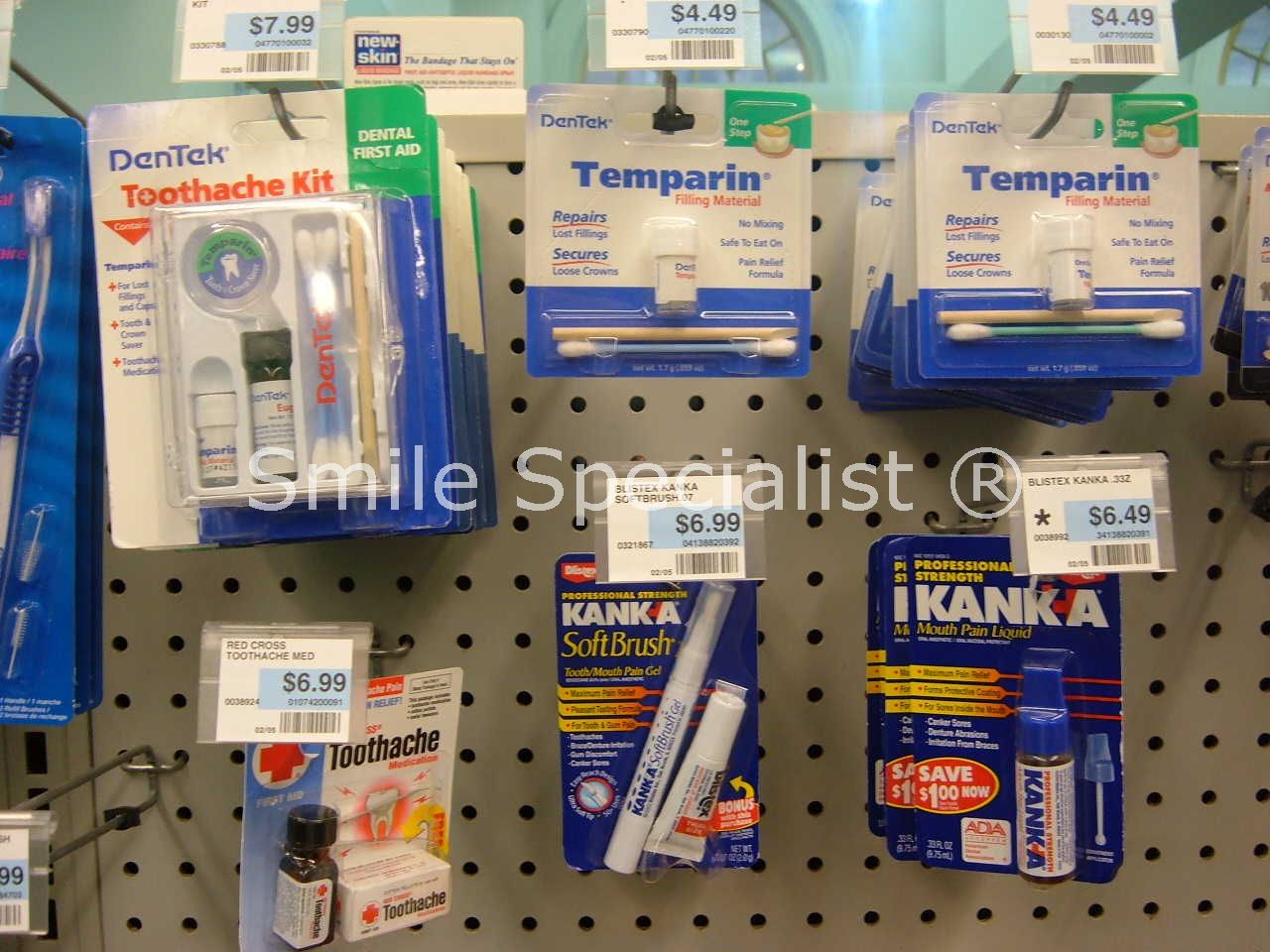
If the crown or bridge seems to fit back properly, soft, non-setting pastes (such as flour and water or denture adhesive) may sometimes be used to hold it temporarily until you can get to a dentist. Remove any loose item before sleeping so you do not accidentally inhale it.
A broken denture is usually not a medical emergency, but it can be very upsetting socially.
- Avoid heavy reshaping or grinding the denture yourself – you may make it impossible to repair properly.
- If you attempt any repair, do so outside the mouth and be aware that super-glue and similar products are risky and may ruin the denture.
- Gums and bone often shrink over time, so repeated fractures usually mean a new, better-fitting denture is needed.
- Check whether your home insurance covers accidental damage to dentures at home.
- Clean dentures over a towel or bowl of water to reduce the risk of breakage if dropped.
A knocked-out adult tooth (with the whole root attached) is an urgent situation. Speed can make the difference between saving and losing the tooth.
- If there was any loss of consciousness, or you suspect other serious injuries, go straight to A&E / call 999 – the medical emergency is more important than the tooth.
- If the person is otherwise well and the tooth has come out whole (not a baby tooth), gently pick it up by the crown (white part), not the root.
- Rinse off obvious dirt with milk or saline, but do not scrub the root.
- Keep the tooth in milk or in the person’s cheek (if they are conscious and not at risk of swallowing it) and seek urgent dental help ideally within 30–60 minutes.
For full details on managing broken and knocked-out teeth, please see our dedicated page on acute trauma and fractured teeth .
Beware of “cheap” dentistry abroad and so-called “Turkey teeth”
We increasingly see dental emergencies and complex problems caused by aggressive or poorly planned treatment abroad – often heavily advertised as “cheap smile makeovers” or “Turkey teeth”. These may involve:
- Extensive trimming of healthy teeth for large numbers of crowns or veneers in a very short time.
- Implants or surgery using different standards, materials or infection control compared with the UK.
- Treatments that are difficult, risky or very expensive to correct later – sometimes even impossible to fix properly.
Prices can look attractive, but follow-up and aftercare are often limited once you are back in the UK. Complications can involve serious infections, ongoing pain and tooth loss, with corrective treatment often costing many times more than doing things properly in the first place.
If you are tempted, please read our full warning page on Dental Dangers Abroad and consider seeking an independent UK opinion first.
The bigger NHS dentistry picture – “The Big Lie”
Many dental professionals believe that the NHS dental system in England has been systemically under-resourced and badly structured for years, despite repeated warnings. This has led to what has been called “The Big Lie” – that NHS dentistry is truly national, preventive and universally available, when in reality access is very patchy.


Sadly, the access problems described in these letters and articles have continued into 2026. As a result, many people are left in pain, turned away, or driven into private care or risky treatment abroad.
Prevention and planning – the best way to avoid emergencies
Almost all common dental diseases are largely preventable. The biggest differences over a lifetime usually come from:
- Seeing a dentist or hygienist regularly for check-ups and personalised prevention advice.
- Keeping sugary foods and drinks to mealtimes and reducing the number of “sugar attacks” per day.
- Brushing twice daily with a fluoride toothpaste and cleaning between the teeth (floss / interdental brushes).
- Not smoking, and limiting alcohol – both affect gum health and oral cancer risk.
- Wearing gumshields for contact sports and addressing teeth grinding or clenching if needed.
We strongly recommend that once any emergency has been dealt with, you commit to finding a dentist who can help you get healthy and stay healthy, whether NHS or private. You may need to travel or invest some time and money, but it is almost always worth it over the long term.
Important notice & disclaimer
This page is written in good faith to help members of the public understand dental emergencies and some possible self-help ideas while they are trying to access care.
- It is general information only and is not a diagnosis, prescription or personalised treatment plan.
- It is not a substitute for being assessed and treated by a qualified dental or medical professional.
- Everyone’s health, medicines and circumstances are different – what is safe or suitable for one person may not be safe for another.
- We cannot accept responsibility for any actions taken based solely on reading this page without seeking professional advice.
If you are unsure what to do, or if your symptoms are getting worse, ring NHS 111, contact a dentist or doctor, or dial 999 in an emergency. It is always safer to ask.
We hope you have found this page useful for general information about dental emergencies and possible self-help hints and tips, if for some reason you cannot access professional advice immediately.
As always, prevention is better (and more pleasant) than cure and we hope that by accessing regular dental care and advice, you maximise dental health and minimise dental problems for yourself and your family, wherever you are in the world. A smile for life is a great gift – some would say it’s priceless!
We are a 100% Private Dental Practice only and we accept patients by Dentist, DCP or self-referral.
However, because you totally fund your time and our expertise, you can be assured that there are no system compromises or restrictions imposed externally upon your dental care at the SmileSpecialist® Centre.
How to find the SmileSpecialist® Centre (map & directions)
The SmileSpecialist® Centre is based at 9–13 Station Road, Haworth, Keighley, West Yorkshire, BD22 8NL – a convenient location between Leeds and Manchester, within reach of Bradford, Halifax and the wider Yorkshire & Lancashire regions. We are opposite the steam railway station at the bottom of the village hill, close to the new Co-op store.
For an improved Smile, find our SmileSpecialist® Centre Dental Practice in Haworth, near Bradford, Blackburn, Leeds and Manchester.
DRIVING
Use our postcode BD22 8NL for your destination, or head towards the Bradford M606 turn-off from the M62 motorway. As you get nearer to Bradford you’ll see signs for Keighley and Haworth, with Haworth being a tourist area for the Brontës and the Steam Railway that still runs.
TRAIN
Get to Leeds central Train Station, then take the Skipton train but get off at Keighley Station – from there it's a short taxi-ride to Haworth (about 10 minutes, around £8). Central Taxis (01535 602 121) are based at Keighley Train Station.
BUS
Get to Bradford or Leeds Bus Station, take the bus to Keighley bus station, then from there the bus to Haworth.
FLIGHT
The nearest airport is Leeds/Bradford (around 45 minutes’ drive away), then Manchester Airport (about 1 hour 20 minutes’ drive away). From there, follow the Bus/Car/Train directions above.
Our SmileSpecialist® Centre Dental Practice is on Station Road, opposite the Steam Railway Station at the bottom of the village hill, just opposite the Co-Op store.
Dr Kilcoyne has won national prizes for the quality of patient services, so you don’t have to compromise. Please do ask your regular Dentist for a Specialist referral to us, or if this is impractical for some reason, you may refer yourself directly.
*Dr Kilcoyne is a fully GDC-registered, trained Dentist and Specialist in the functional & cosmetic aspects of Tooth Implants, Crowns, Bridges, Precision Dentures, Mini-implants, Ceramics, Veneers, Occlusion, Bonding and Restoring Smiles.
Best Wishes from the SmileSpecialist® Centre Team.
- Details
Clinical Hypnosis
Medical and Dental Hypnosis can help you "help yourself", once you know how!
Therapeutic Hypnosis in Medicine and Dentistry is empowering you and entirely different to the hyped & theatrical Stage Hypnosis silliness seen on TV.
In TV entertainment-type Stage Hypnosis one observes extroverts get permission to be, well, extrovert. IT IS NOT THE SAME AS PROPER CLINICAL HYPNOSIS THERAPY!!
Remember they have chosen to go up onto a stage publicly and then act silly along with the other extroverts who are there too!
If Stage hypnotists tried to be silly with people still sat in their seats not volunteering, they would fail miserably in fact!!
Medical and Dental Hypnosis is therapeutic & entirely different and puts you MORE in control of your feelings and situation, as much as you need to be to overcome a fear or a barrier that is stopping you do what you want to do - I suppose it should really be called "Self-Hypnosis" because it is about 'teaching' you the techniques to use whenever you need or want to.
SELF-HYPNOSIS:
Hypnosis is all about using your mental skills to improve some aspect of your life. Sportsmen and Women are using Hypnosis more and more now to improve their performance. It is also good at helping them focus on their goals and to be relaxed enough so that the emotions of the day do not spoil their months/years of preparation. Remember Lyndford Christie's false starts costing him the race?
Medical and Dental Professionals have patient care as a central part of their approach anyway, so providing Hypnosis in this caring environment provides the expertise and confidence that your needs are being cared for Professionally. Hypnosis is just ONE of their many skills. Clearly you have to be alert to use Hypnosis in sports. You have to be aware of all that is around you, but be focused on your goal (eg: the finishing line). Hypnosis requires the ability to concentrate and understand some simple relaxation exercises, by a skilled hypnotherapist , that's it, it's got nothing to do with sleep ,indeed you need to be mentally alert to get the most out of it, though some people find it very relaxing to be more in control of course.
So Hypnosis is no big mystery. Anyone can benefit and anyone who can concentrate can do it for themselves.
The hypnotherapist is simply the "coach", maximising the skills you already have (eg: willpower, relaxation, determination, motivation etc.) but you may not be using to their full potential yet. Then you are shown how to control these at will, just when you need them most.
Hypnosis is about putting you MORE in control, not less!
Most members of the public do not realise this basic truth. If ever there was a subject about which so much rubbish is written, Hypnosis would come top. Hypnosis is NOT sleep, you do NOT lose control, you know EXACTLY what you are doing, totally.
So why is there so much misunderstanding about Hypnosis generally?
Mainly because most people don't know the truth about the science behind hypnosis, but perhaps they have seen stage hypnosis acts or read about certain unscrupulous, unqualified hypnotherapists in the papers. The "unscrupulous" part has everything to do with the person, NOT the hypnosis.
Just like an unscrupulous businessperson in the papers, it would be wrong to reject all "business" because of that particular person concerned.
I am often asked, is stage hypnosis real? Some bits are real, but much is deception of the audience. For example, volunteers are often asked to come forward, so this subtly extracts the extroverts out from the audience (why would an introvert go up on stage?). Some suggestibility exercises are done with this group to see who is most up for a laugh. The rest are sent away. Why is that then? Simply because most ordinary people don't want to be silly, though it is sometimes surprising to see someone you know to be "usually" quite, volunteer for the show! It's a bit like a "Britain's got Talent" rejects show at times.
These "super-extroverts" soon start to compete as the suggestions get more outrageous and the Audience responses get more encouraging. Those that don't, get sent away quietly, leaving the most outragous people to play their version of "Simon says...." with the stage Hypnotist. It's all a "show", but not "real" hypnosis!
You might wonder WHY would anyone be so silly on a stage, but again look what people who can't sing or dance do on some Talent Contest shows and what about yourself, have ever sung in the shower, or dreamed of being a pop-star or imagined yourself being famous? For some people then stage hypnosis allows you to act out your fantasies, with the GREAT excuse of the event being responsible for the "extrovert" behaviour they may have displayed (remember, real introverts don't usually volunteer to go up in front of an audience, but some people wish to be extrovert but have supressed it!) and if surrounded by people being more silly or competitive, you may get sucked in to trying to out do the others too. But that's a normal range of human behaviour in groups and you may have observed this in other places such as at weddings, parties or even negative group behaviour at football matches etc.
Where else do people act silly on stage without involving Hypnosis?
If you want to see people who don't look much like Elvis, don't sound much like Elvis, but are giving it their 100% hip swinging Elvis extravaganza and all that, go to any Kareoke bar!!! Many look and sound ridiculous, carrying on even though those watching are laughing at them!
No hypnosis involved there, just an extrovert with an attentive audience. It's free too, so you won't be financing any "dubious" stage hypnotists either.
Again Stage Hypnosis just exaggerates the "Karaoke" behaviour effect, letting extroverts be even more extrovert - sometimes they embarress themselves so much, they claim not to remember (or wish not to remember!) afterwards. No mystery here either, the same is true of any embarrassing behaviour, after the event, where denial or minimising what happened in the cold light of day, is a normal reaction too.
Sadly Stage Hypnosis shows simply "mis-represents" what proper Medical Hypnosis is really all about, which is more self-control, not less!
I would also think that they confuse both the audience and their "victims" on stage, without "proper" information or consent.
Certainly with stage Hypnotists, they don't seem to take medical histories, follow up their "volunteers" after that day or care "professionally" for their mental and physical well-being. Most seem to "abuse" their participants care, by ridiculing them publicly, for "entertainment" purposes only!
Not very ethical by anyone's standards, but until someone changes the laws to protect the public from such abuse, Stage Hypnosis is not illegal either.
How do I find a reputable Hypnotherapist?
This is probably the most difficult one to answer, because there are a lot of "useless" qualifications out there, with Hypnosis (and Psychology, by the way) being totally unregulated. Any fool can put up a sign and call themselves a "Psychologist" or "Hypnotherapist". Isn't that crazy?
There are also many Degrees or Qualifications that don't mean anything but sound very grand, which were essentially just bought after a short course.
Here are my recommendations, for what they are worth:
1. Ask your Dentist, Doctor, Health Board or PCT for their recommendations.
2. Go to someone who is already Medically or Dentally Qualified and has also had further training in Hypnosis.
3. Contact The British Society of Clinical and Academic Hypnosis (BSCAH), which was formed in 2007 by the merger of these two professional societies BSMDH and BSECH, where BSMDH was for mainly Doctors and Dentists and BSECH was for mainly Psychologists. Try this link https://bscah.co.uk to search for a practitioner who is also a regulated healthcare Professional, for your assurance.
4. Go on the British Dental Association web-site www.bda.org and look under find-a-dentist, using hypnosis as a search. Do the same on the BMA web-site too.
5. If all those methods fail, go by reputation and recommendation to a Hypnotherapist who has other qualifications additional to hypnosis.
Hypnosis has been (and continually is) validated by the scientific community. Many published papers in refereed scientific journals show hypnosis to be quick, effective and safe, when applied by skilled Practitioners.
My personal training & qualifications include a University diploma in Clinical Hypnosis, and I am happy to see Dental Patients directly or Medical patients on referral from their Doctor or Psychologist for medical problems too. Patients also have the re-assurance that my professionalism is controlled, checked and indeed receives awards for the quality of our patient care in an area outside of my hypnosis training and skills too.
We have many examples of patients who have got back in control of something they felt out of control of. If you weren't born with a condition, then Hypnosis can be an effective way to help YOU help yourself improve, in any way you choose.
Our SmileSpecialist® Centre Dental Practice is on Station Road, opposite the Steam Railway Station at the bottom of the village hill, just opposite the new Co-Op store.
Dr.Kilcoyne has won National Prizes for the Quality of Patient Services, so you don't have to compromise ! Please do ask your regular Dentist for a Specialist referral to us, or if this is impractical for some reason, you may refer yourself directly.
*Dr.Kilcoyne is a fully GDC Registered, Trained Dentist and Specialist* in the Functional & Cosmetic aspects of Tooth Implants, Crowns, Bridges, Precision Dentures, mini-implants, Ceramics, Veneers, Occlusion, Bonding and Restoring Smiles.
The Importance of good Aftercare and Maintenance!
As well as regular check-ups to your Dentist to prevent problems (or at least catch them very early-on), please follow your aftercare advice, reduce sugar attacks and don't neglect your Toothbrushing and Flossing Techniques that reduce the Dental Plaque that damages your teeth, gums and dentistry work.
Want to know more about brushing and Flossing techniques that prevents bad breath and keeps your Mouth and Dentistry Healthier too? Then please click these for Tooth Brushing Information or Dental flossing techniques or Preventing Gum Diseases links.
*Dr.Kilcoyne is a UK registered Specialist in Prosthodontics (GDC No.58373) which includes The Functional and Cosmetic Dentistry aspects of Crowns, Dental Implants, Bridges, Veneers, Fillings, Dentures, Bonding etc.
Please go to our MAKE an APPOINTMENT page if you'd like to access his Expertise, for YOUR benefit.
- Details
Nervous Patients
Nervous or Anxious patients are treated gently & caringly. using extra-time, our expertise and Specialist skills too, at our SmileSpecialist® Centre.
Continually through 2026, we are providing very gentle , safe and high-standards of personal dental care, at our Dental Practice in beautiful Haworth, near Keighley, Bradford, West Yorkshire, routinely for decades - just read some of our very detailed reviews and feedbacks.
All forms of Advanced Cosmetic Dentistry are available to all, gently and including all Dental Implants, mini Implants, minimplants® , immediate Dental Implants, Crowns, Bridges, Veneers, Precision Dentures, Tooth Bleaching, Teeth Whitening, Cosmetic Bonding, Latest Ceramic Restorations, Second Opinions, Smile Profiling, Gum Diseases, Tooth wear and worn, uneven teeth, Periodontal Plastic Surgery, TMJ's, Difficult Occlusions, Excessive Wear Cases, Root canal treatment, Trauma and Emergencies; Anxious or Nervous Patients welcome too!

Some Anxiety at the Dentist's is not unusual, however, there are a significant proportion of the public who are HIGHLY Anxious at the Dentists. Quite commonly, they will stay away from help for years, until something hurts, or breaks or smells bad in their mouths. Even then, some will resist coming to the Dentist, preferring instead to dose themselves up with painkillers, alcohol or other alternatives. Anything rather than face their greatest fear the Dental Practice.
Eventually, some pains come and go until, one day, the toothache is horrendous. All the drugs don't work anymore, the pain is just too great. Perhaps the toothache is so bad, they haven't slept for days, there whole head is throbbing, perhaps infection is causing blood poisoning or stomach problems too. So eventually, they feel forced to see the Dentist for an Emergency appointment.

The patient is now highly anxious, possibly even shaking uncontrollably at the thought of an appointment, they are tired and in great pain and totally untrusting of this Dentist, whom they have never seen before. The Dentist does their best to reassure this Anxious person, who finds it difficult to sit still, is flinching everywhere, eyes bulging out and darting around trying to see everything that is going on. The patient AND the Dentist both find this situation very stressful, even
though they both want the same thing, to sort the (now extremely bad/difficult) problems out, by firstly getting rid of the pain.
Eventually, perhaps the patient lets the Dentist place a simple dressing that temporarily reduces the pain, with a further appointment made to start getting their mouth healthy again. The very anxious patient misses the next appointment (without phoning) because they aren't in pain now, so the whole cycle starts again! This patient ends up loosing all their teeth and has to manage with two wobbly pieces of plastic, called Dentures. Gums shrink, dentures are relined and remade,
but they do not perform or chew as well as their own teeth did. A soft diet becomes the norm. and eating an apple seems like an impossibility.
The children also suffer, as this parent cannot face bringing them for regular visits either.
Is there a better way?
Absolutely YES !!! Nobody was born anxious to the Dentists, so good experiences can help to reduce any anxiety down to a controllable level.

The above thankyou card is displayed with the Patient's permission.
Whether our patient or not, we would recommend the following approach:
1. Don't just attend in pain - that just associates negative feelings with the Dentist. It would be like waiting until your car broke down before taking it for servicing. You wouldn't be suprised if it needed much work then, would you. Although you may "scrap" your Car and get a new "better" one, if you "Scrap" your teeth, Dentures are NOT a substitute for teeth, they are a substitute for nothing!
2. Tell any Dentist you are very anxious or nervous and ask if "extra" time can be set aside for your visit. If they say no, then consider another Practice or go Private. You need time.
3. See the same Dentist every time, if possible. You get to know them and they understand and remember your particular needs better.
4. Go more regularly to your Dentist. This may sound crazy, but it actually helps you greatly. You stay healthier too, so you need less treatment and have less problems! Remember, regular visits mean you spend LESS time at the Dentist (because you are healthier!) overall.
5. Seek out more advanced techniques. For example, there are decay dissolving gels that reduce the need for injections or drills. There are also useful prevention techniques too, such as sealing teeth against decay. This is good for Adults and Children too.
6. Making that first step is the hardest. Once you find a Dentist that understands your problems, take their advice and get back in control of your feelings, the sooner the better. Get Dentally sorted so that you can easily maintain Dental health - this includes prevention techniques!
7. If the above fails, consider Medical Hypnosis to help you get back in control of your feelings, or ask your Doctor to recommend a specific Counsellor who has helped other similar cases. We understand that the first step is the hardest, but you weren't born anxious to the Dentist, past experiences or events have led you to feel this way - the good news is that this problem can be reversed and you can be proud of your smile once more!
The big problem most people have is the "lack" of time that NHS Dentists or Doctors can allocate to "Anxious" patients. With all the cuts, rationing, increased NHS paperwork as well as the pressure on NHS clinicians to reduce waiting lists and "boost" patient numbers seen, something has to give and sadly individual Time often gets rationed on the NHS too! This was predicted to get even worse from 1st April 2006, when the DoH forces a new "target-driven" contract onto Dentists and unfortunately this seems to be the case, though the government would never admit it!
Unfortunately NHS Dentistry problems with high volume targets and little time per patient, have simply got worse and worse, year on year :(

You may find that by "purchasing" more time and advanced "painless" techniques, that your previous bad experiences can be left in the past, where they truely belong - however, this may mean that you will have to fund your Dental visits Privately if you want more time for the best care to meet your needs, in a way that you prefer. In my experience, extra care and time is important for ALL patients if we are to avoid any unpleasant experiences, but especially so if you are already Anxious to start with - rushing you through a "very busy" NHS system may not meet your particular needs sufficiently.
How anxious are you?
Why not take this simple dental Anxiety Questionnaire to find out:

Most nervous patients had a bad experience in childhood, when they were most impressionable, at a time when Dentistry was at it's most basic.
It wasn't really Dentists or patient's fault, they just didn't have all the advanced techniques, materials and treatment skills we have today.
With the right amount of time, skills and advanced techniques available today, there is no reason why Dentistry shouldn't be comfortable,
reliable and cosmetically pleasing too! It may be that you just haven't accessed this type of care yet!
Whilst we know we have the time and skills to help you, don't worry if you cannot get to us in Yorkshire - there are other Practices that can help too!
We have a fine reputation for both the Quality of our Modern Dentistry AND the comfortable and caring way we deliver our Care.
It is most unfortunate that we have had to withdraw from the Rationed NHS GDS Dental system in England in order to not drop our very high standards.
However, most people realise that Quality is more important than Quantity, when it comes to working inside your mouth, even if that means funding their Dental Care Privately - but with some Dental plans starting from less than £5 per week if your mouth is in reasonably good condition, many chose Private Dentistry as an extremely "good value" choice that doesn't compromise the highest level of regular care they wish to receive. Only you can chose what "Dental Care" is worth to the Quality of your Life!
This isn't about NHS verses Private Dentistry, they are both needed to benefit Society and offer proper choices and hopefully one can positively influence the other, work with the other and actually be recognised as synergistic for the OVERALL needs of our Society!
Please call us on 01535 644005 or email:
Why not take that first step and find the Dentist or Specialist who can help you achieve what you want from Modern Dentistry today. Leave the past where it belongs, in the past. A new beginning awaits you.
The Importance of good Aftercare and Maintenance for All !
As well as regular check-ups to your Dentist to prevent problems (or at least catch them very early-on), please follow your aftercare advice and don't neglect your Toothbrushing and Flossing Techniques that reduce Dental Plaque attack on your teeth, gums and dentistry work.
Want to know more about brushing and Flossing techniques that prevents bad breath and keeps your Mouth and Dentistry Healthier too?
Our SmileSpecialist® Centre Dental Practice is on Station Road, opposite the Steam Railway Station at the bottom of the village hill, just opposite the new Co-Op store.
Dr.Kilcoyne has won National Prizes for the Quality of Patient Services, so you don't have to compromise ! Please do ask your regular Dentist for a Specialist referral to us, or if this is impractical for some reason, you may refer yourself directly.
*Dr.Kilcoyne is a fully GDC Registered, Trained Dentist and Specialist* in the Functional & Cosmetic aspects of Tooth Implants, Crowns, Bridges, Precision Dentures, mini-implants, Ceramics, Veneers, Occlusion, Bonding and Restoring Smiles.
*Dr.Kilcoyne is a UK registered Specialist in Prosthodontics (GDC No.58373) which includes The Functional and Cosmetic Dentistry aspects of Crowns, Dental Implants, Bridges, Veneers, Fillings, Dentures, Bonding etc. Please go to our MAKE an APPOINTMENT page if you'd like to access his Expertise.
From the SmileSpecialist® Centre, we wish you well and hope the above information and ideas have been helpful.
Specialist Cosmetic Tooth Veneer Treatments in Haworth, near Keighley, Halifax & Bradford
Considering porcelain or composite veneers for your smile?
Dental veneers can improve the colour, shape, position and overall appearance of certain teeth, but they are not always the best option for every smile. At the SmileSpecialist® Centre in Haworth, near Keighley, Halifax and Bradford, Dr Anthony Kilcoyne provides experienced Specialist-level cosmetic and restorative assessment to help you decide whether veneers, bonding, whitening, orthodontics, crowns or another option may be kinder and better long-term for your teeth.

Veneers may be made from porcelain, composite or advanced ceramic materials. When carefully planned, they can produce a highly natural improvement in your smile in a relatively short time. However, the best result depends on the health of the underlying teeth, your bite, your expectations and the skill with which the case is assessed, designed and carried out.
Consultations with Dr Kilcoyne are currently £99, giving you access to decades of specialist prosthodontic expertise in cosmetic and restorative dentistry.
Dr Anthony Kilcoyne is a fully registered UK Specialist in Prosthodontics, a field that includes veneers, crowns, bridges, implants, dentures and bonding. This means your veneer assessment is considered in the wider context of both appearance and long-term function, so the aim is not just a prettier smile, but a smile that is healthier, more stable and more appropriate for you.
Do you want a smile that you can feel proud of, sometimes in just weeks?
*Dr Anthony Kilcoyne BDS; LDS; MGDSRCS(Eng); M.Med.Sci.(U.Sheff.); FFGDP(UK), GDC Registered Specialist in Prosthodontics, with an additional special interest in braces too.
GDC number 58373, see www.gdc-uk.org to verify Dr Kilcoyne’s credentials.
What are Dental Veneers and when can they help?
Teeth Veneers for Cosmetic Dentistry are not all the same. They vary according to the material used, the design, the underlying tooth and the clinical skill with which they are planned and fitted. Veneers may be made from composite, porcelain or advanced ceramic materials, including ultra-thin options such as Lumineers, but one needs the expertise to know when veneers are appropriate and when another treatment may be better.
Veneers are usually bonded onto the front surface of teeth, so they are only as good as the teeth to which they are attached and the circumstances in which they are used. Sometimes crowns rather than veneers may be advised, especially if the tooth is already heavily weakened, the bite is very strong, or habits such as grinding at night are likely to fracture or displace veneers.
For some patients, veneers can make a tremendous difference to appearance in a matter of days or weeks when they are expertly planned and designed to copy nature’s shape, texture and colour. For others, a more conservative or more durable option may be the wiser long-term choice. This is exactly why experienced assessment matters.

Dr Kilcoyne is a recognised Dental Specialist for aspects of Cosmetic Dentistry that include Dental Tooth Veneers, Ceramic Crowns, Bridges, Implant work and bonded fillings too (Prosthodontics). You can read here free information about veneers and, further down the page, some common questions and answers about Dental Tooth Veneers.
Whilst veneers are heavily promoted on smile makeover programmes as some kind of universal answer to improving smiles cosmetically, the advantage of consulting a Specialist such as Dr Kilcoyne is that all other options can also be considered, either separately or in combination, to help improve your smile in a way that is individual, naturally beautiful and kinder to your teeth and gums long-term.
What can Dental Veneers improve?
Veneers can beautify your smile by improving the position, colour and shape of one or more teeth. A veneer is often a thin shell of composite, porcelain or ceramic material bonded to a tooth, generally covering mainly the front surface and sometimes wrapping slightly over the edge where appropriate.
Veneers may help close spaces between teeth, lengthen small or misshapen teeth, disguise chips, improve worn edges and brighten darkened teeth. They can also help improve the harmony of a smile where one or two teeth stand out visually in a way that the patient dislikes.
In general, veneers are often most suitable when there is still enough sound tooth present. If there is much more extensive damage or destruction, crowns or other restorative options may sometimes be better.
Below is a good example of a veneer correcting a mis-shapen upper front tooth:

Are Veneers right for everyone?
No. Veneers are only as reliable as the tooth to which they are bonded. If the underlying tooth is weak, heavily filled, cracked or otherwise compromised, it is obviously more likely to have problems than a strong, sound underlying tooth. A heavy bite may also fracture a veneer in function, and sometimes this is only fully appreciated after chewing use.
Many patients are willing to accept this risk, knowing they can often progress to a stronger crown if needed later, without committing to greater tooth removal in the first instance. However, where many filled teeth are in a heavy bite, or where grinding and clenching are significant, a crown or a different treatment plan may be wiser from the outset.
Ultra-thin veneers such as Lumineers can sound appealing because they may require less tooth reduction, but they are not always appropriate. In stronger bites, or where underlying teeth are dark, they may prove too weak, too bulky or unable to mask the underlying colour properly. A careful, expert assessment is therefore essential.
What is involved with Dental Veneer treatment?
Veneer treatment usually takes two or more appointments. At the first appointment, your teeth are examined carefully, suitability is assessed, and the teeth may be gently shaped where necessary. Impressions or scans and other records are then used to create precise working models so that the veneers can be designed to fit your teeth accurately.
At a later appointment, the prepared teeth are polished and cleaned, and a special adhesive is used to bond the veneers into place. A harmless high-intensity light hardens the bonding material. Once fitted properly, veneers can function much like natural teeth, but they still need sensible care and maintenance.
The final result, as shown by the series of pictures below, is often a more beautiful and natural-looking smile.

If teeth are really dark, they can sometimes be bleached lighter first, so any veneers do not suffer from dark shine-through. This is especially important with very thin veneers, which may not adequately hide darker underlying tooth colour.
How long do Porcelain Veneers last?
This depends on many factors, including the health of the underlying teeth, the way the bite functions, habits such as grinding, oral hygiene and how suitable the case was in the first place. As a broad guide, 5 to 15 years can be reasonable in favourable circumstances, but some veneers fail earlier and may need to be re-bonded, replaced or, in some cases, converted to crowns instead.
This is one of the reasons why your initial assessment is so important. A veneer done in the right case, for the right reason and in the right way, is much more likely to give a long-lasting result.
Alternatives to Veneers
Veneers are only one of several modern cosmetic and restorative options. Depending on your own teeth, smile goals and budget, alternatives or complementary treatments may include:
- Orthodontics / Braces for tooth position
- Cosmetic Dentistry planning for broader smile design
- Composite bonding for selected cases
- Whitening where colour is the main concern
- Crowns where teeth are more heavily compromised or require greater strength
Good cosmetic dentistry is not about pushing one fashionable treatment. It is about helping you choose the option that is most suitable, most conservative where possible, and most likely to work well for you long-term.
Fees and Payment Options
*terms and conditions apply, but most people get approval for dental use.
Thus a payment of say £3950 to improve your smile = £395/month to pay....
NOTE - now get a 10% discount if you pay in advance with BITCOIN or ETH.

Cosmetic Dental Tooth Veneers in more detail
A veneer is a thin outer cosmetic covering for a tooth. Veneers are usually made from composite, porcelain or ceramic, although other materials have also been used. Dental veneers have become more popular as a relatively quick way to cosmetically improve a smile.
However, it is important that this type of work is done expertly and in a way that creates enough improvement in your smile to justify the time, expense and the removal of sound tooth substance that even thin veneers may sometimes require. Learning more about dental veneers, their pros and cons, and the alternatives — including doing nothing — is therefore a worthwhile exercise.
Whilst improving a smile can make a person feel more confident, it is also important not to have unrealistic expectations. Professional advice on an individual basis helps you make the right decisions for you at the right time.
Would you like to benefit from Dr Kilcoyne’s Specialist opinion in this complex and important area?
Please read the information below and above, then call us on 01535 644005 for a personal assessment appointment or click on the Make Appointment tab at the top of this page if preferred.
Frequently Asked Questions About Dental Veneers
What are dental veneers?
Veneers are very thin custom-made layers of porcelain or composite bonded to the front of teeth. They can improve the colour, shape, alignment and overall appearance of your smile while keeping as much natural tooth as possible.
What is the difference between porcelain and composite veneers?
Porcelain veneers are made by a dental technician and usually last longer, resist staining better and give highly natural aesthetics. Composite veneers are built directly on the tooth in one visit and can be more affordable, but may stain or chip sooner and need more maintenance over time.
Am I a suitable candidate for veneers?
Veneers may be suitable if your teeth are healthy but you are unhappy with their colour, shape, small gaps, minor crowding or wear. Your dentist will check your bite, gums and existing enamel first and may suggest whitening or orthodontics as alternatives or in combination.
Do veneers damage my natural teeth?
Modern veneer techniques aim to be minimally invasive. In many cases only a very small amount of enamel is reshaped, and sometimes none at all. However, veneers are usually an irreversible treatment, so careful planning, photos and mock-ups are essential before you decide.
How long do veneers last?
With good oral hygiene and regular check-ups, porcelain veneers can often last 10–15 years or more; composite veneers typically have a shorter lifespan and may need refreshing or replacement sooner. Avoiding habits like nail biting or opening packets with your teeth helps them last longer.
Can I have veneers if I live around Haworth, Keighley or Bradford?
Yes. Many patients travel from Haworth, Keighley, Bradford, Halifax, Skipton and surrounding areas for veneer and smile makeover treatments. Your dentist will discuss all suitable options, including more conservative choices, at your consultation.
How much do veneers cost and what happens at a consultation?
The fee depends on how many teeth are treated, whether porcelain or composite is used and how complex the case is. At your consultation the dentist will examine your teeth, take photographs and any necessary scans, discuss your goals and provide a written, personalised treatment plan with costs and options.
Dr Kilcoyne has won National Prizes for the Quality of Patient Services, so you do not have to compromise.
We hope that whether you seek your treatment from SmileSpecialist® or elsewhere, the range of information provided on our website will help you in discussions with your own Dentist, so you can fully consider which options best meet your needs, budget and long-term wishes for your dental health.
The SmileSpecialist® Centre is based at 9–13 Station Road, Haworth, BD22 8NL – opposite the steam railway station and near the new Co-op store.
Dr Kilcoyne is a fully registered UK Specialist in Prosthodontics, which includes Teeth Implants, Crowns, Veneers, Dentures, Bonding and related restorative work, so treatment is considered both functionally and cosmetically to help you achieve a smile you can be proud of without unnecessary compromise.
Dr Kilcoyne has won National Prizes for the Quality of Patient Services. Please do ask your regular Dentist for a Specialist referral to us, or if this is impractical for some reason, you may refer yourself directly.
*Dr Kilcoyne is a fully GDC Registered, trained Dentist and Specialist in the functional and cosmetic aspects of Tooth Implants, Crowns, Bridges, Precision Dentures, mini-implants, Ceramics, Veneers, Occlusion, Bonding and Restoring Smiles.
The Importance of good Aftercare and Maintenance
As well as regular check-ups with your Dentist to prevent problems, or at least catch them early, please follow your aftercare advice, reduce sugar attacks and do not neglect your toothbrushing and flossing techniques. These reduce the dental plaque that damages your teeth, gums and dentistry work.
Want to know more about brushing and flossing techniques that help prevent bad breath and keep your mouth healthier too? Then please click these for Tooth Brushing Information, Dental flossing techniques or Preventing Gum Diseases.
*Dr Kilcoyne is a UK registered Specialist in Prosthodontics (GDC No.58373) which includes the functional and cosmetic dentistry aspects of Crowns, Dental Implants, Bridges, Veneers, Fillings, Dentures and Bonding.
Please go to our
MAKE an APPOINTMENT page
if you would like to access his expertise for your benefit, or simply call us on 01535-644005 and leave your details.

Best wishes from the whole SmileSpecialist Team
Click Here if you are Worried about the Possible Dental Dangers Abroad, to find out more....
For patients who have already lost all their natural teeth, or have had bad work abroad, then smile improvement may begin with Precision Dentures, designed to restore facial support, create a natural smile line and improve day-to-day function.
Wishing you good Dental Health and a Smile to be proud of, from all at the SmileSpecialist® Team.