Dental Tooth Implants near to Bradford & Leeds - Yorkshire UK 2026.
SmileSpecialist® Centre, in Haworth, Keighley, Bradford, West Yorkshire BD22 8NL, UK
For dental implants 2026 onwards – whether it’s for a single or multiple missing teeth – we have many options and possibilities including mini implants or Minimplants®, smaller root-shaped implants and larger standard cylinder-shaped tooth implants with screws inside them.
Serving the Bradford, Leeds and wider West Yorkshire area, these are just some of the different dental implant options that Dentist & Specialist* Dr Tony Kilcoyne can plan and provide for your individual needs after a detailed examination and consultation with you.
NOTE – you get a 10% discount in addition to any Special Offers if you pay in advance with BITCOIN or ETH!
CORONAVIRUS & SAFETY UPDATES 2026
Thank you for your continued patience with our prevention systems. There are still occasional outbreaks
of Covid, flu and norovirus etc; in late 2025 there were new strains of bird flu that are one mutation away
from another Covid-type pandemic as people mix and travel more – and frankly, most people don’t clean
their hands as well as they used to.
Please wash your hands often (a common spread of disease is via contact with people and handles),
especially before eating snacks or fast foods, pizza etc.
Matching the Best Implant System to You, Not the Other Way Around in a limited way.
When it comes to dental implant work, Dr Kilcoyne matches the best implant system to you – not limiting you to just a single make of implant. Many people travel from Bradford, Leeds, Manchester and much further afield to access our expertise, so why not arrange a detailed consultation with Dr Kilcoyne directly, currently from just £99?

Whether you are an Olympic athlete or simply need a specialist opinion from Bradford or further afield (London, Manchester, Leeds, Blackburn, the rest of the UK and beyond), there are many modern ways to improve your mouth using advanced implant dentistry techniques. Here in Haworth, Keighley (between Leeds and Manchester) we can often minimise or even eliminate extensive bone grafting surgery for implants, depending on your individual situation and wishes.
Now 0% interest-free payments available over 10 months*
*Terms and conditions apply, but most people get approval for dental use.
Example: a treatment cost of £2900 to improve your smile = only £290/month over 10 months.

Would you like a broken tooth or root extracted and a tooth implant placed straight back?
Dr Kilcoyne does many of these “extract and implant” cases. To preserve bone and eliminate infection, it’s often better that he sees and treats these early to maximise success with immediately placed implants – which can sometimes carry a temporary tooth whilst healing (if your bite is favourable).
For more choices or details about dental implants, newer one-piece (smaller, solid and stronger, with no screws to come loose later) implantology, new mini-implants / Minimplants®, root-shaped same-day implants, new keyhole surgery techniques that heal quicker, bone graft options, smaller implants, immediate teeth implants and alternatives such as advanced bridges and precision dentures, please read further down this page.

The X-ray above shows a standard-sized single tooth implant placed (buried under the gum – the tooth gap is still there) in the lower right jaw. It will need an extra part screwed onto the top later, called an abutment, and then a crown on top.
This is a typical standard-sized implant in lots of bone that is wide and deep – but not everyone has this, especially as bone starts to shrink quickly after a tooth or root has been extracted. That is why we like to coordinate the extraction and implant placement appointments, sometimes placing the implant the same day to avoid or reduce the need for extra bone-grafting surgery. This is just one example of how specialist expertise can save you extra surgery, time and delay.
3D X-rays, Keyhole Surgery and Same-Day Teeth
3D X-rays are available for implant planning. Where bone height and volume are low and you have been told there isn’t enough bone for implants, we may still be able to place smaller root-shaped implants using keyhole surgery techniques, after careful planning and measurements.


Whether you are interested in same-day implant and same-day teeth solutions or buried implants avoiding major bone grafting surgery, you will need a detailed implant assessment so that we can give you the choices of implant type, surgery approach and any grafting that may work best for you.
Typical price for Implant + Abutment + temporary Crown = around £2400 from us, often done the same day using Dr Kilcoyne’s keyhole surgery techniques to minimise surgery, speed up healing and reduce or avoid major bone grafting and its extra stages, risks and trauma.

We can even extract certain teeth and replace them with implants at the same visit (after assessment and planning). In many cases, we can place a temporary fixed tooth so that you experience fixed-in teeth from day one, even while the implant is healing over 3–6 months.
Case example – narrow bone, keyhole surgery & same-day tooth
The case below was someone told that 3 mm of bone width was not enough for an implant. However, Dr Kilcoyne used a special keyhole technique and provided a same-day tooth, avoiding the delay, swelling and extra risks of major bone grafting.


Healed implant – temporary tooth removed, note the good gum shape and final crown with no gaps against the gums.
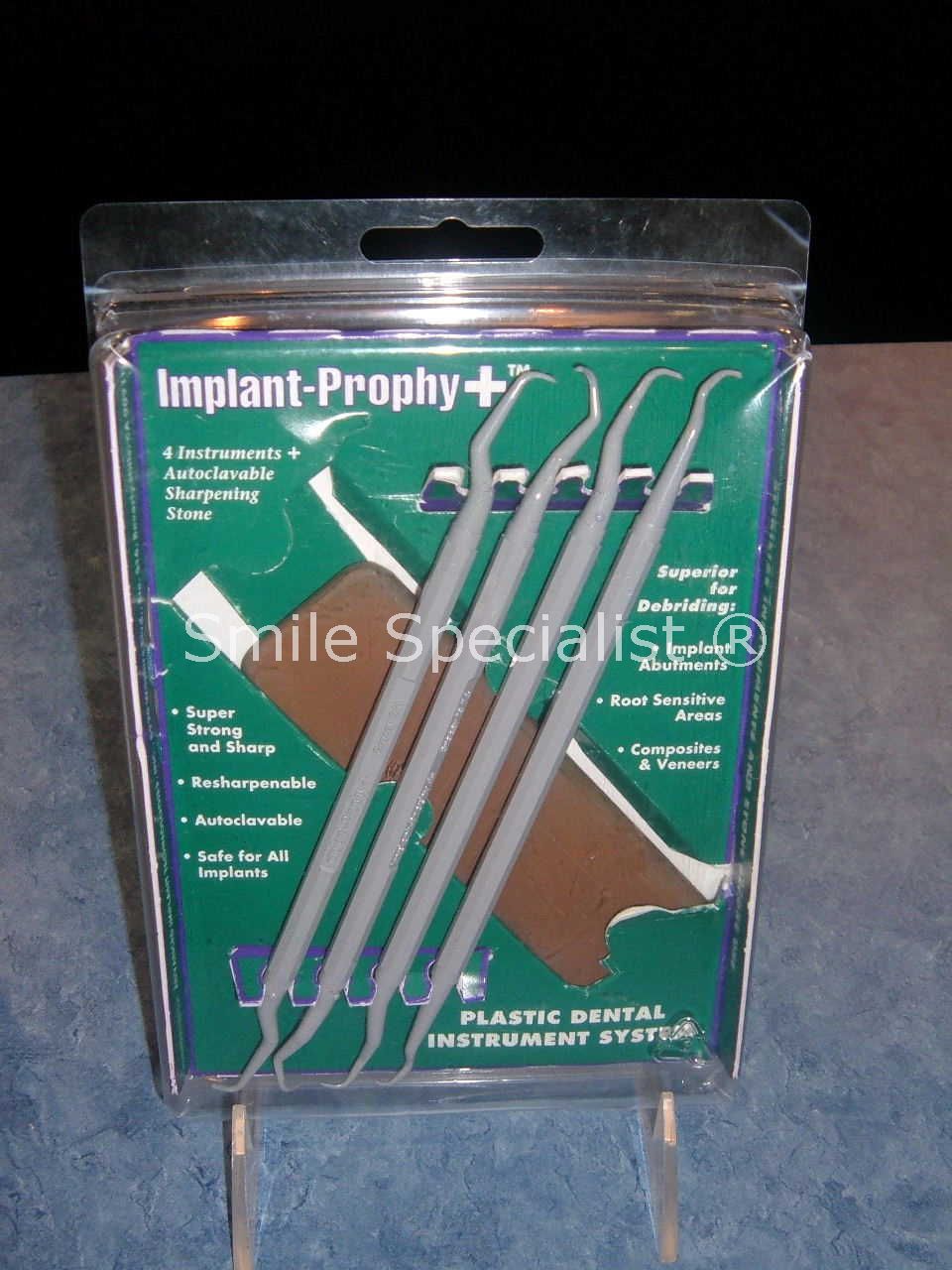
For ongoing maintenance, implant-supported teeth need special care. Your own dentist will use modified instruments that don’t damage the titanium surface, unlike standard stainless-steel scalers. Below is an example of implant-safe instruments used for maintenance.
Don't forget our very Special Offers for 2026 – unbelievable value!

Click here to view current Special Offers from SmileSpecialist®
Mini & Midi Implants – Options When Bone Is Limited
Dental implants are basically titanium “roots” that replace the roots of natural teeth. They can be used to replace single teeth without drilling the neighbouring teeth, to stabilise loose dentures, or to support full sets of fixed teeth – as long as there is enough bone to support them.

The most critical factor is having enough height and width of natural bone to support an implant. Without sufficient bone, the implant’s foundations are weak and more likely to fail. Ideally we want the largest appropriate implant in the best bone position, but if that requires major bone grafting surgery, some patients prefer less invasive alternatives.
Same-day mini or midi implants can often be placed with minimal surgery and provide same-day teeth. These “newer” smaller implants, from leading manufacturers, are already revolutionising how easily people can access implant-retained teeth. Sizes can be as small as 1.8 mm in diameter up to around 3–3.5 mm for certain designs.
Here is an example of a patient’s narrow bone that would previously have been condemned as having no implant options without major bone grafting:

Cases like these can now often be suitable for mini-implants, avoiding major grafting surgery. At our SmileSpecialist® Centre we always try to fit the largest sensible implant within the bone available, but we balance this against the extra surgical risks and healing time that larger grafts entail.
Average cost for keyhole surgery of a MIDI-sized implant + abutment + temporary crown placed same-day is around £2400 by Specialist Dr Kilcoyne. Smaller implants are often cheaper than standard-sized work and may still allow same-day provisional teeth – avoiding or greatly reducing bone grafting surgery and its extra cost, time and risks.
With so much to measure and consider, an implant assessment is essential before you make any final decisions. This appointment (currently £199 now £99 for up to one hour) will give you clear facts and tailored options.
Bone Grafts, Surgical Considerations & When They’re Needed
Where there isn’t enough bone for standard-sized implants, it may be possible to surgically add bone. This can increase the height and width of bone so that larger implants can be placed, but it also adds complexity, extra visits, swelling and a longer healing period (typically 6–12 months).

Bone grafts can be taken from minor sites (for example, extraction sockets or the chin) or major sites (such as the iliac crest of the hip bone). These can be combined with pure mineral substitutes to add bulk. Newer, more cost-effective materials are becoming available all the time.
We do not use any animal or human products for bone grafting – only your own natural bone, where needed, or pure mineral alternatives.
The advantages of bone grafting are that, if you are willing to wait 6–12 months, significant bone volume can be added and implant position, size and foundations can be optimised. The disadvantages are the extra surgery, additional risks (including the graft not taking or becoming infected) and longer treatment time.
Surgical considerations – volume and quality of bone
As well as the volume of bone, we must consider the quality of bone when assessing an implant site. The shape and width of the ridge, the outer cortical bone and inner medullary bone all matter.

Some problems can be managed surgically, such as ridge expansion (to improve width), bone condensation to increase density, sinus lift procedures (in the upper jaw) and, in rare complex cases, nerve repositioning. Each adds another stage and its own risks, so they should be considered carefully.
For very complex or oral cancer reconstruction cases, several surgeons (including plastic surgeons) may be involved and treatment is normally carried out in a hospital setting.
Typical Costs & Success Rates for Dental Implants
Obviously, every case is individual, but as a rough guide at our practice:
- Single tooth implant (including crown) is typically around £2750.
- A small to medium bone graft done at the same time may be around £490 extra, so both heal together.
- Average cost for a MIDI-sized implant + abutment + temporary crown placed same-day is around £2400 by Specialist Dr Kilcoyne.
If many more implants are involved, the case becomes more complex to restore (for bite and aesthetics), so each full case is estimated individually after assessment.
Here is a link to our prices page for mini, midi and standard implant fees (please remember that we are Specialists).
Success rates – realistic expectations
Success rates are never 100% for anyone. Crossing the road isn’t 100% either – there is always a small background risk. Our average success rates are very good and currently:
- In the lower jaw (mandible) we see >95% success in favourable cases.
- In the upper jaw (maxilla) we see >87% success in favourable cases.
These success rates can decrease in more complex cases, where there is bone grafting, poor bone quality, smoking, complex medical histories or previous infections.
Our success rates are based on treating everyone we reasonably can – including many difficult cases. Some surgeons quote higher success rates but refuse to treat the more challenging 40–50% of patients. We prefer to be transparent and try to help wherever possible, including in patients who have had gum disease but improved, or smokers who are willing to work on risk factors.
Are you willing to accept that there is still a small risk of failure despite everyone’s best efforts?
If an implant fails to bond to the bone, re-treatment is usually possible after healing. At our practice, we normally include one free replacement should your implant not take the first time. If it fails twice, then implants are probably not right for you and alternative options should be considered.
When implants do bond successfully and are maintained well, they can perform excellently for eating, talking and smiling confidently – and, like natural teeth, may last many years or even a lifetime. Only you can decide if the risk-to-cost-to-benefit ratio is right for you.
Tempted by Cheaper Dentistry Abroad (Hungary, India, Poland, Turkey etc.)?
Let’s be honest – there is usually only one real reason why sensible people consider going abroad for surgery or dentistry: it’s to save money, full stop.
It’s not about struggling with a different language and culture, or the “fun” of flying back every time an adjustment or complication arises. Nor is it about enjoying lower regulation, weaker consumer protection, poorer insurance and lack of continuity of care from a stranger overseas.
On holiday, it may feel fine to buy cheaper food, drink, clothes or DVDs – those are commodities. But teeth are not disposable. Complex dentistry is more like keyhole surgery – the wrong shortcuts can cause permanent damage.

The picture above (from an overseas advert) tells a very different story to the reassuring text. Treating patients without gloves would not be regarded as safe or normal practice in the UK today.
With HIV, hepatitis A/B/C, TB, resistant infections and emerging viruses, you have to consider what other standards might be compromised if such a basic measure is overlooked. Many of these countries still need overseas medical and dental aid and education.
See official UK GDC advice and warnings by clicking here.
We may not be the cheapest (nor the most expensive) but if you can find the same quality, qualifications, experience and long track-record for less, please tell us – thousands of patients believe we offer good value for the level of specialist expertise we provide.
Doing the wrong thing in the wrong way is very poor value long-term, even if it seems cheaper at first. Your teeth and health are far more valuable than a “holiday bargain”.
The SmileSpecialist® Centre is based at 9–13 Station Road, Haworth, Keighley, West Yorkshire, BD22 8NL – a convenient location between Leeds and Manchester, within reach of Bradford, Halifax and the wider Yorkshire & Lancashire regions.

For an improved smile, find our SmileSpecialist® Centre Dental Practice at Haworth, near Bradford, Blackburn, Leeds and Manchester:
Driving
Use our postcode BD22 8NL as your destination, or head towards the Bradford M606 turn-off from the M62. As you get nearer to Bradford you’ll see signs for Keighley and Haworth. Haworth is a tourist area for the Brontës and the steam railway that still runs.
Train
Get to Leeds Central Train Station, then take the Skipton train and get off at Keighley Station. From there it’s a short taxi ride (around 10 minutes, about £8) to Haworth – Central Taxis (01535 602 121) are based at Keighley Station.
Bus
Get to Bradford or Leeds Bus Station, then take a bus to Keighley Bus Station, and from there a local bus to Haworth.
Flight
The nearest airport is Leeds/Bradford (about 45 minutes’ drive away), then Manchester Airport (around 1 hour 20 minutes). From there follow the car, bus or train directions above.
Our SmileSpecialist® Centre Dental Practice is on Station Road, opposite the steam railway station at the bottom of the village hill, just opposite the new Co-op store.
Specialist Expertise & National Awards
Dr Kilcoyne is a fully UK-registered Specialist in Prosthodontics which includes dental implants, crowns, veneers, bridges, dentures, bonding etc., to restore or replace teeth functionally and cosmetically so you can have a smile you can be proud of, without compromise.
*Dr Tony Kilcoyne BDS; LDS; MGDSRCS(Eng); M.Med.Sci.(Univ.Sheff.); FFGDP(UK) –
GDC Registered Specialist in Prosthodontics with an additional special interest in braces.
GDC number 58373 – see
www.gdc-uk.org
to check credentials.

The Quality Development Award (QDA) was judged by the British Dental Journal, Denplan and Colgate, with Dr Kilcoyne’s practice winning this prestigious award for the quality of his patient services. This picture is from some years ago, but our standards and advances have continued to improve further still.
We can help you get the smile you deserve, using our combined precision dental and Specialist* skills, training and knowledge.
Frequently Asked Questions About Dental Implants
The Importance of Good Aftercare & Maintenance
As well as regular check-ups with your dentist to prevent problems (or catch them very early), please follow your aftercare advice, reduce frequent sugar attacks and don’t neglect your toothbrushing and flossing techniques that reduce dental plaque – which damages teeth, gums and dental work.
Want to know more about brushing and flossing techniques that prevent bad breath and keep your mouth
and dentistry healthier?
See
Tooth brushing information
,
dental flossing techniques
and
preventing gum diseases
.
*Dr Kilcoyne is a UK-registered Specialist in Prosthodontics (GDC No. 58373)* which includes the functional and cosmetic aspects of crowns, dental implants, bridges, veneers, fillings, dentures, bonding etc.
Please go to our MAKE AN APPOINTMENT page if you’d like to access his expertise for your benefit, or simply call us on 01535 644005 and leave your details.

Best wishes from the whole SmileSpecialist® Team.